Social Icons

Pages

Showing posts with label Fish Bass. Show all posts

Wednesday, September 6, 2017

Jigging For Pompano

Florida Pompano Jigging Like a Pro

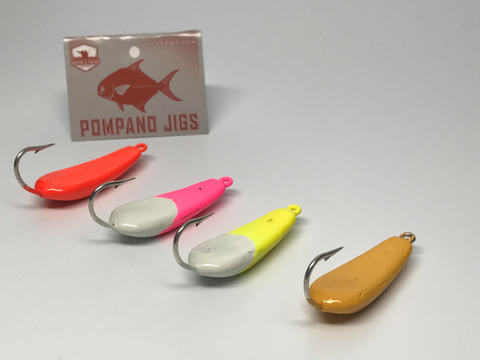
When the inshore water temperature hits 68 degrees, the locals flock to the beaches and passes to try their luck at catching pompano.  The Pompano are related to Permit and are considered a delicacy to most anglers.  Pompano seem to congregate in the winter following the sand fleas into the passes and onto the beaches.  One of my personal favorite ways to catch pompano is throwing Pompano Jigs.


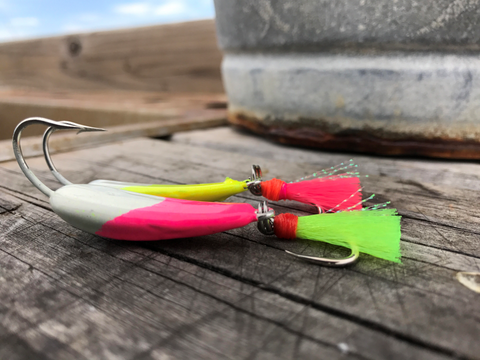
One of the most popular and successful jigs is the goofy jig.  The jigs action and color sets it apart from the others.  The jig imitates a sand flea as it pumps and berries its self into the sand.  You fish them by popping the jig off the bottom then letting them sink back and TOUCH the bottom again.  The pompano will hit on the fall or after the jig hits the sand.  Try HFDepots Pompano Orange and Pompano Sun Yellow for best results in most water colors because the fish can see them best .  A teaser can also be added to the top to imitate a egg sack which will trigger more aggressive bites.  Also try adding Pro-cure scent because pompano have an excellent sense of smell.  Old school anglers will even tip the jig with a piece of shrimp or sand flea.  Sand fleas can be found by digging in the wash line on the beach.
When your ready to head out to try your luck, look for passes, sand bars, drop offs holes etc.  Pompano will sit and feed in places where the sand is swept away bringing food by their faces.  Also, along the beaches on the second sandbar or the drop off in between the beach and first sand bar.  Pompano can be found from North Carolina to Mississippi.  South Florida in the winter and spring has the largest concentration of Pompano that I have found.  Some of my favorite passes to fish are Midnight Pass near Sarasota and the Cut at St. George Island. The best thing about catching pompano is it can be done from the beach without a boat. 


Check out our selection of jigs at https://shop.hfdepot.com/pages/pompano-jigs .  I would suggest the Orange and Yellow with or without teasers and a bottle of Pro-Cure.

Do not hesitate to contact us at info@hfdepot.com with any questions may have. Send us your best pompano pictures to be featured on our social media and website. Please leave comments below! Subscribe to our blog so you do not miss out on great material.

Ugly Fish Pictures: 12 of the most scary fish pictures on the Internet

12 Terrifying Pictures of Ugly Fish

When ocean fishing or lake fishing, there is always the possibility of catching unique creatures at any time. Some times anglers get lucky and catch things that fascinate everyone. These pictures often become viral. As our curiosity grows about our oceans and lakes, so does the curiosity for the extremely weird things that live in them.


These terrifying monster fish or animals come in all shapes and sizes. Some look as if they are right from child's nightmare, while others are mutant-looking as if they were pulled right from the waters of Chernobyl. There should not be many things that haunt the nightmares of most anglers. Maybe the occasional thought of the "one that got away". But after compiling this list we are sure some of these will make you thing twice the next time you go in the water.

1) The BlobFish

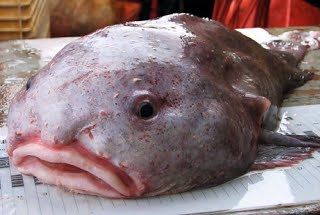
No this is not a picture of blobfish sunglasses, although they are a great brand and make great sunglasses. This was 2016's world ugliest fish. The best fish picture to start this article out with, THE BLOBFISH.
The blobfish is a deep water fish that can be found often in depths of 2000ft to 3900ft. An interesting fact about the blobfish is its body is a gelatinous mass, creating a body density less than water. This allows for the fish to float above the ocean floor and not exert energy on swimming.  

This goes down as one of the ugliest and scariest fish found in the ocean. Looks like its right out of Hollywood, except this blob isn't engulfing people or buildings.


2. Sarcastic Fringehead

The sarcastic fringehead or the modern day Predator looking fish is something not of this planet. A small bottom dwelling fish that often resembles a goby, until it opens its mouth displaying its true colors.

These fish tend to be very territorial like their distant cousin, the alien predator, is with earth. Opening their mouth displays an extended jaw line made up of multiple colors. You can think of their mouth like you think of a peacocks feathers. This is all for show. If you saw this fish in the wild, it is guaranteed sure you would have to give it a second look.

3. The Tiny Tiny Candiru

This little guy is probably the smallest fish on our list. The Candiru looks awful harmless and I bet most people would even say it is even cute. This is one that needs to be feared! This is a parasitic catfish that has a huge appetite for blood.

This fish has a history of swimming up mens urethra and feasting in the persons bladder. It may not look like the scariest fish on the planet, but the pain it can cause can bring a grown man to his knees.

4. Wonderfish: Fish With Its Own Fishing Pole

This fish is truly a weird and exotic fish. It is also known as the wolf trap due to its lower jaw that forms to look like a trap. Thank God this is a deep water fish, because if you were ever to come face to face with this ugly fish you may think twice about swimming in the ocean again.

If you have ever done inshore fishing, then chances are you have caught a lizard fish. The big cousin to these guys that live in the oceans depths pack a mouth full of razor sharp teeth. These things look like they are from the movie Aliens, instead they lurk in the deepest parts of our oceans.

5. The Deep Sea Lizardfish

If you have ever done inshore fishing, then chances are you have caught a lizard fish. The big cousin to these guys that live in the oceans depths pack a mouth full of razor sharp teeth. These things look like they are from the movie Aliens, instead they lurk in the deepest parts of our oceans.

6. Acient Sea Serpent: The Oar Fish

Very rarely do people encounter the oar fish. This deep sea fish can reach lengths up to 36 feet. In ancient times, it is believed when sailors and fishermen experienced a sea serpent, it could have potentially been an oar fish. In our opinion this is still a very ugly fish. Although it is a gentle giant, it will always turn heads.

7) Goblin Shark: Swimming Fossil

The first shark to make the list. This rare species of shark is found in the deep sea. It is often times referred to as a "living fossi.l" It belongs to the family of sharks dating back million and millions of years. This goblin shark gets a A+ in the scary fish photo category. With a grill like that, it's only one a mother could love.

8) Monk Fish: A Chefs Delicacy
 

This freaky-looking fish makes our list because of how ugly it is with its large oversized head. For years this fish was feared by many in the fishing community until they realized how delicious it was. Now the monkfish is a delicacy in the cooking word. Scary fish or not, this is truly a remarkable species.

The viperfish is one of the most scary looking deep sea fish that exists on the planet. Mostly feared due to its over size teeth and its aggressive hunting abilities. It makes it one killing machine, not to mention a fish that sure creates a scary fish photo.


9) Viperfish

The viperfish is one of the most scary looking deep sea fish that exists on the planet. Mostly feared due to its over size teeth and its aggressive hunting abilities. It makes it one killing machine, not to mention a fish that sure creates a scary fish photo.


10) Anglerfish

When you look at the anglerfish, you are looking into the face of something that exist in your nightmares. This bizarre deep sea fish is named for its fish luring light helping it catch its prey. Although it may be scary in appearance, it's a delicacy to eat in the majority of the world.

 11) Snaggletooth

The snaggletooth fish looks like an alien swimming in the depths of our oceans. This scary looking fish is known as a deep sea predator. Like most deep sea fish the snaggletooth fish is luminous and has its own glowing lure that it uses to attract prey. 

12) Dragonfish 

The last fish on our list is another deep sea fish. I have the feeling that your beginning to get the picture that the deep sea is one scary place.

The dragonfish is another scary fish that catches the fascination of most people. Like most fish in the depths of the ocean, it aluminates to attract its prey. It is a ferocious predator.

 At hunting and fishing depot, we hope you have enjoyed viewing a few of these terrifying fish. Do not hesitate to contact us at info@hfdepot.com with any questions may have. Send us your best creature pictures  to be featured on our social media and website. Please leave comments below!

Wednesday, August 23, 2017

Fishing report: Heavy rain improves bass and catfish bite

Melvin Stewart on the Cumberland River: 


I traveled toward downtown on Sunday and fished the main river channel. The water was stained, at 79 degrees and 6 inches above summer pool. I greatly enjoy fishing first thing in the morning for small mouth bass in the current on rocky bluff banks. I caught one nice three-pounder on a top water popper while riding the bank making long casts. In addition, I also caught three large mouth bass in the shallows using a 10-inch red-and-black worm. .

• Brian Carper on Percy Priest:


The lake continues to produce quantity and quality crappie. Up lake is producing the most with a mix of keepers and short fish. Focusing in 12-18 feet of water around brush piles and stake beds while fishing with live minnows 2-3 feet off the bottom and with Crappie Magnets in purple/chartreuse on a 1/8 ounce jig has been the ticket. Around Fate Sanders Marina, the Weakley Lane Bridge and up to Spring Creek have been fabulous. Bass continue to move up and down points and ledges in 8-12 feet of water. Mid-range crank baits in shad pattern, Carolina Rigs and shaky heads with Zoom green pumpkin trick worms or red ribbon tail worms have been successful. With the abnormal cooler temperatures moving into Tennessee for August we'll continue see a shallower bite. 

• Chris Snow on Center Hill: 


Bass fishing continues to be good and has been all summer. The nighttime bite is still producing the best results. This trend should continue for the next several weeks. Worms, jigs and spinner baits are the baits of choice. Fish these baits along 45-degree banks for best results. Walleye fishing continues to improve, especially in the mid- to upper-section of the lake. 

• Steve McCadams on Kentucky Lake:


At midweek, in the aftermath of thunderstorms, a rare August cool snap descended and the change is suiting Kentucky Lake anglers just fine. Lower humidity and temperatures aren’t the norm in late August, but no one is complaining. Surface temperatures have been in the 82-85 degree range. Lake levels have been falling slowly, but some localized flooding on Tuesday may see the reservoir crest for a few days. Projected elevation for Kentucky Dam this weekend will be 356.9. Upstream at New Johnsonville the reservoir is projected to be in the 356.7 range. Water color remains clear in the main lake, but several bays are stained in the upper end. The upper end of Big Sandy also had muddy water entering at midweek. There has been a little current this week as TVA has been pulling water most days through Kentucky Dam with enough volume to keep a little flow in the main channel areas. The slow current has helped bass and catfishing at times. Bass anglers are finding main lake ledges paying dividends in a typical summer pattern. Big Texas-rigged worms are still producing as are shad colored variations of big deep diving crank baits. Carolina-rigged craws and worms have produced too as have some swim baits.

• Tim Tighe on lower half of Cheatham Lake: 


As of Monday afternoon the main lake is in relatively good shape, but stained in some areas and clearer in others. You can catch fish in both, but the clearer water gives you more options for sight baits such as swim baits, drop-shotting, etc. The Harpeth River is very stained. This has been a tough year for water clarity especially in the Harpeth, which forces you to slow down and probe the thick cover with dark colored or vibration baits. Most of the creeks are also in good shape. This will sound similar to last week’s report, but very little has changed except for the Harpeth’s condition. What has been working for me lately is fishing early when the fish may be almost anywhere. They moved to the transition zone or the first break line about 8-15 feet as the sun gets stronger or brighter. I use my electronics to see what level the shad are at and catch them with a crank bait, swim bait or other shad-imitating bait. Then, as the sun gets even higher in late afternoon, I find them around deep wood or on the ledges in the main lake using Zoom Old Monster worms in plum or redbug, Strike King Bottom Dweller spinner baits (3/4 to 1 ounce) or Strike King 6XD crank baits on the appropriate level on the ledges.

• Joey Monteleone on the headwaters of Percy Priest and a small lake:


 Surface water temperatures are steamy. Late summer typical patterns of early morning and late are holding up. Many species are holding in the shade or combinations of submerged wood and aquatic weed beds. I found fish scattered in as little as one foot and up to 12. I actually saw some active bluegill spawning beds this week. Catfish remain active, still seeking comfort in cooler current close to deep cover. We’re locked into a strong summer bass pattern of a top water bite, subsurface crank bait and soft plastic success. The Texas-rigged soft plastics, worms, craws and creature baits are solid for the next several weeks. Try submerged wood and secondary weed beds of any variety. Points and dropoffs deserve a cast or two. The crappie bite is sporadic. It will get better once temperatures drop. Live minnows, soft plastics, small tubes and small curly tail grubs are working for crappie. Bluegill, redeye and sunfish continue to eat red worms or bits of nightcrawlers on a No. 8 light wire hook with a small split shot for weight all under a float. The next major moon phase will be full Sept. 6.

Impressive catches earn NZ Sport Fishing Council trophies


There were some impressive fish captures in the NZ Sport Fishing Council’s 2016/17 annual trophy list, including a world record swordfish and a ‘grander’ blue marlin, both caught out of trailer boats.

Nicky Sinden’s 361.0kg swordfish, recently ratified as a women’s 60kg tackle world record, also saw her take out the coveted ‘Old Man and the Sea Trophy for the most meritorious catch of the season. The fish was caught on stand-up tackle in the vicinity of the Garden Patch, out from Whangaroa.

Muriwai club member Wade Wilson, fishing out of Ahipara, landed a 466kg blue marlin to claim the heaviest game fish of the season and Fisherman of the Year honors. The biggest striped marlin went to Mt Manganese's Carey Wilson who landed a 196.6kg fish near Astrolabe reef, also out of a trailer boat.

Billfish tagging honours this year went to Houhora club’s Donna Pascoe, fishing aboard Gladiator with eight striped and three blue marlin to her credit. Whangaroa club’s Baily McIntyre took out the overall tagging award for 12 yellowtail, 10 blue shark, 8 mako and 2 bronze whaler.

Shimano Coltsniper Wonderfall jigs


Shimano’s versatile Coltsniper Wonderfall Jigs are specifically engineered to suspend longer when dropping through the water column. By spending more time in the strike zone, these lures are more visible to saltwater predators looking for an easy meal. They are available in five colours and 30, 40, 50, 60, 80 and 100g weights. The twin assist rigs feature quality VMC Stinger hooks.

Available from all Shimano retailers nationwide.

NZFN Sept 2017 preview


Welcome to the September edition Bluefin tuna – the aftermath

Last month we shared information, similar to what was on social media, regarding the run of bluefin tuna off Cape runaway in the eastern Bay of Plenty.

What resulted was nothing other than a ‘tuna fever’ that ran hot among the highly mobile fishing fraternity. While it was great to see anglers getting among the action, there were always going to be repercussions.

In this issue we look at the aftermath of ‘bluefin’ fever, and talk to a number of people including the Waihau Bay club, scientists, Ministry for Primary Industries and NZ Sport Fishing Council to get their spin on it – interesting reading.

While the bluefin run extended our gamefishing season, there is still plenty more action out there to be had. Ben Carey this month looks at the winter albacore run that can produce fish up to 25kgs plus – great fun on light tackle.

For those who like their action closer to home, both Gene Bryan and Andy Macleod cover off land-based tricks and techniques.

Anglers are frequently met at the ramps by both Ministry for Primary Industries officers as well as NIWA volunteers, wanting to check out the catch. The latter group are conducting important research for NIWA on the fish stocks and extent of the recreational catch. Their work is explained this issue by scientist Bruce Hartill.

New contributor Peter Jones kicks off a series on small boat fishing tips and tricks while kayaker Rob Fort continues his series on winter fishing.

We preview the forthcoming Auckland On the Water Boat Show. Hunting and Fishing NZ will dominate the fishing court which is again hosted by NZ Fishing Media – us. Included will be the popular seminars where various experienced anglers share their knowledge with show patrons.

For those who like to enjoy angling offshore, this issue has some great destinations. One of the most spectacular is Costa Rica where Josh Worthington and James Brown get among some insane tarpon action. Mark Kitteridge continues his Niue sojourn with his third and final feature.

Adam Clancey and Grant Dixon cover off fishing opportunities in Canada and Hawaii. Tony Orton makes a case for ‘going light’ in his Journey of a Fisherman series.

Two boats are put through their paces this month – Al Brown and Jeremy Coombes award-winning Surtees 575 Pro Fisher Centre Console is covered in Grant Dixon’s Setting Up for Sportfishing while Sam Mossman’s Trailerboat Trial features a Frewza F18 Hard Top.

All of the above, along with the regular features and columns, makes for a great month of reading. Enjoy!

3 Ways to Zone In on Deep Bass


Knowing the ‘right’ depth to focus on is a difficult task for bass anglers, especially as they move to deeper water. Searching for bass in deep water can start to feel a little like looking for a needle in a haystack, which is probably why many anglers still avoid deep bass fishing. Spending just a few hours offshore in the abyss without knowing what depth zone to key in on can send any angler back to the bank with their proverbial tails tucked between their legs. 

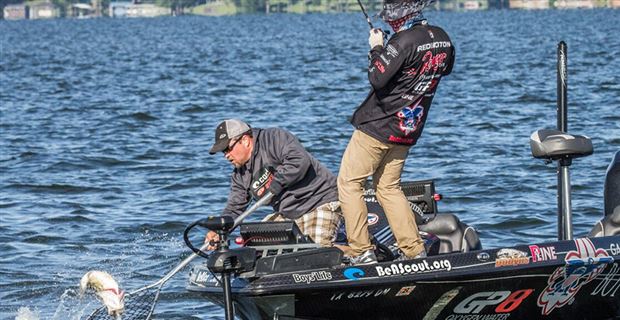
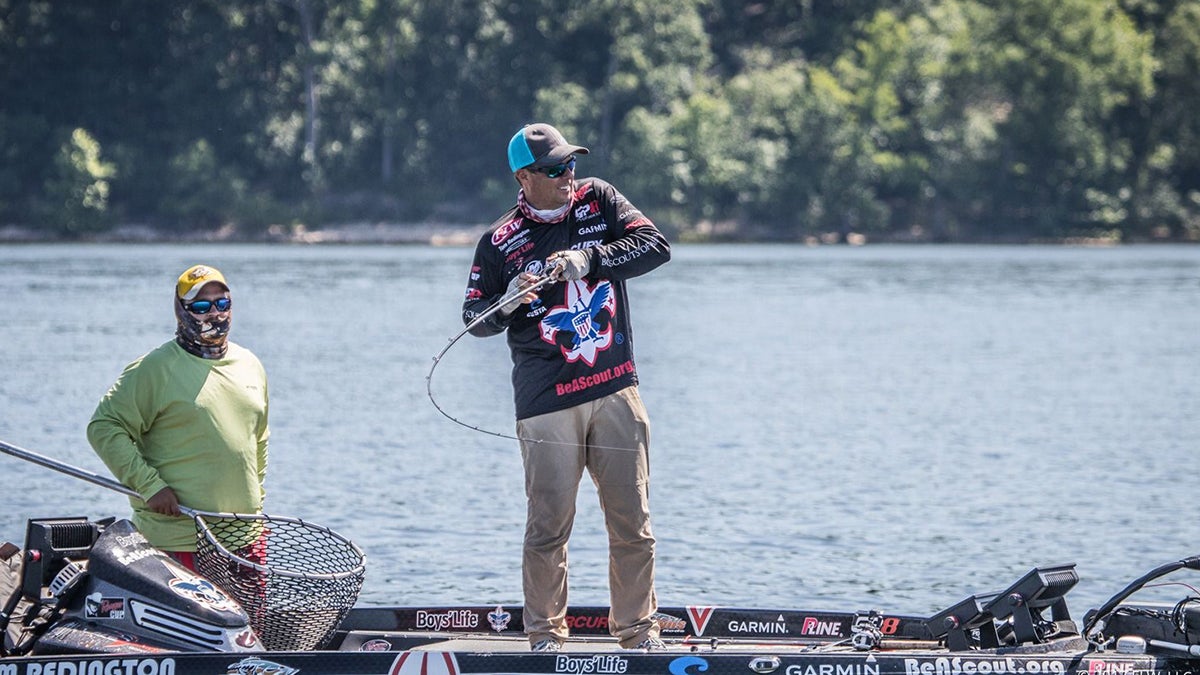
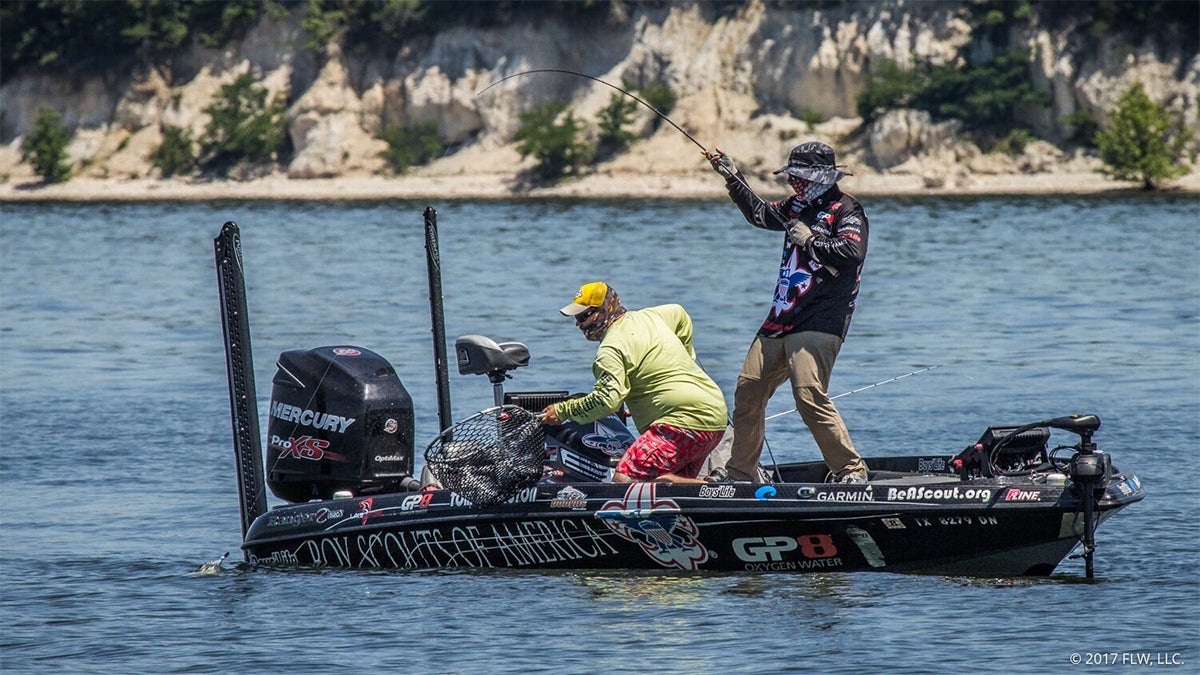
Fortunately, FLW Tour pro Tom Redington has found a way to zone in on the key depth range for a given fishery. Furthermore, he has a few tips on how to find more spots within this ideal depth that can help you on your next search for offshore bass. 

Focus on the ‘right’ depth


As bass move offshore, Redington believes there is an optimal depth range in every section of every fishery. This ideal depth is different for every lake and changes as bass migrate. Redington has used this phenomenon to his favor in his career, racking up several high finishes in offshore–dominated tournaments by understanding the ‘right’ depth.

“The real advantage of this concept is that it makes an angler’s search easier,” Redington said. “Once I find what I feel is the ideal depth range, whether it’s in 8 feet deep or 28 feet, I can look at a lake map and specifically focus on areas in this opportune depth. Offshore fishing can be overwhelming, but this method really allows me to zone in on structure in the depths I am confident bass are using. “


He first learned the nuances of finding the right depth during his time guiding on Lake Fork. Redington would notice schools of bass holding consistently to specific depths for a few days, only to find they moved deeper the next week. It wasn’t only one school of bass that would move deeper, though. Instead it seemed all the schools of bass in one section of a fishery would move somewhat in unison. 

“This logic helped me notch another Top 10 in an FLW Costa Series event on Kentucky Lake last month,” Redington said. “On the final day of practice I found the bass were out deeper than I normally find them—26 to 29 feet seemed to be the key depth. After I figured that out, anywhere I found a creek channel junction, hump or a ditch at that depth had a good chance of having some bass on it. And by only focusing on those depth zones, I was able to find several schools of bass with less than a full practice day.”

Redington runs Garmin electronics and uses their Depth Shading mapping feature to make his search even easier. Depth Shading was important in helping Redington throughout the FLW Tour season and directly contributed to his recent Top 10. 

“Garmin Depth Shading helped me tremendously,” Redington said. “I used 3-foot contours on my color shading and made the 26 to 29-foot zone yellow so it really jumped out at me. Illuminating several spots I ended up catching fishing in the tournament on that I had never even graphed, let alone fished. Contours with 1-foot intervals are extremely helpful in many situations, but they get kind of busy out deep on a complex lake. By making 3-foot contour intervals and changing the color patterns it made finding the spots kind of easy.”  

Quickly find the ‘right’ depth

Redington’s number one shortcut to find a key depth during an offshore tournament is quick, easy and can be practiced with anything from 2-D sonar to today’s modern electronics. 

“The first thing I’ll do is graph a deep point or ledge that falls off into very deep water,” Redington said. “Whether it’s Lake Fork, Kentucky Lake or Table Rock, you’ll be able to see a distinct line at a certain depth where both fish and baitfish seem to be suspending. This line is usually unmistakable and for whatever reason, fish don’t want to go deeper than this specific depth zone. Where I find this line is exactly where I start my search in an offshore tournament. 


“If I see baitfish and predatory fish consistently suspending in 28 feet of water, I’m going to graph structure from 25 to 28 feet deep. It’s important to understand this depth won’t be the same for an entire lake. Especially on a body of water with a clear, stable lower end and a shallow, riverine upper end for example. There will still be ideal depths in the different areas of a lake, but they’ll be different and specific to the section of the lake you find yourself in.”

Redington suggests this phenomenon occurs throughout the year but is something he uses to his advantage when bass go to their deepest haunts during the summer and winter months. Even though this shortcut has helped him cash numerous checks, Redington admits he doesn’t understand exactly why fish strictly relate to these ideal depths throughout different times of the year.  

“Who knows why exactly the fish do it,” Redington joked. “Biologically they may be relating to thermocline or light penetration, or it could be water temperature or dissolved oxygen. Something definitely is a driving factor, because the consistency is there, but I won’t pretend I know exactly why. As an angler, it really doesn’t matter what they are relating to as long as I understand it happens and do my best to take advantage of it.” 


Once Redington feels he has zoned in on the opportune depth range the baitfish, bass and other predatory fish are using he employs another shortcut to refine his search for likely spots. 

“I’ll look at my electronics and find structure with the most surface area in the optimal depth,” Redington said. “Whether it’s 12 feet or 30 feet, I’ll look for points, humps, channels or ledges with a lot of surface area in that depth zone. This narrows down my search to areas I believe have the highest percentage of holding large schools of fish.”

The method of finding spots with a significant amount of surface area in the key depth zone gives Remington the highest probability of finding bass in his allotted practice time.

Bonus Link ==>> Endangered whales won't reach half of pre-hunting numbers by 2100, study says


Blogger Templates