Social Icons

Pages

Showing posts with label Fish Hunting. Show all posts

Wednesday, September 6, 2017

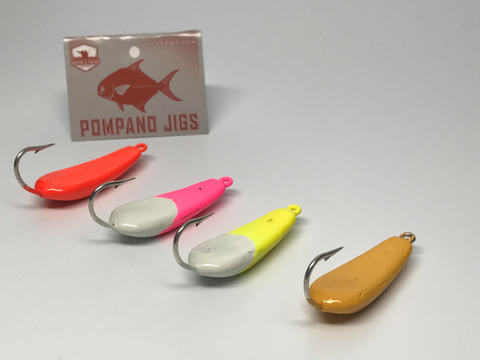
Jigging For Pompano

Florida Pompano Jigging Like a Pro

When the inshore water temperature hits 68 degrees, the locals flock to the beaches and passes to try their luck at catching pompano.  The Pompano are related to Permit and are considered a delicacy to most anglers.  Pompano seem to congregate in the winter following the sand fleas into the passes and onto the beaches.  One of my personal favorite ways to catch pompano is throwing Pompano Jigs.


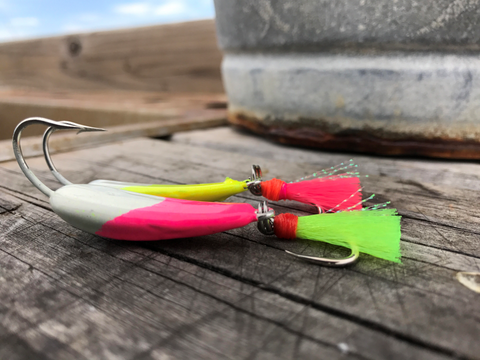
One of the most popular and successful jigs is the goofy jig.  The jigs action and color sets it apart from the others.  The jig imitates a sand flea as it pumps and berries its self into the sand.  You fish them by popping the jig off the bottom then letting them sink back and TOUCH the bottom again.  The pompano will hit on the fall or after the jig hits the sand.  Try HFDepots Pompano Orange and Pompano Sun Yellow for best results in most water colors because the fish can see them best .  A teaser can also be added to the top to imitate a egg sack which will trigger more aggressive bites.  Also try adding Pro-cure scent because pompano have an excellent sense of smell.  Old school anglers will even tip the jig with a piece of shrimp or sand flea.  Sand fleas can be found by digging in the wash line on the beach.
When your ready to head out to try your luck, look for passes, sand bars, drop offs holes etc.  Pompano will sit and feed in places where the sand is swept away bringing food by their faces.  Also, along the beaches on the second sandbar or the drop off in between the beach and first sand bar.  Pompano can be found from North Carolina to Mississippi.  South Florida in the winter and spring has the largest concentration of Pompano that I have found.  Some of my favorite passes to fish are Midnight Pass near Sarasota and the Cut at St. George Island. The best thing about catching pompano is it can be done from the beach without a boat. 


Check out our selection of jigs at https://shop.hfdepot.com/pages/pompano-jigs .  I would suggest the Orange and Yellow with or without teasers and a bottle of Pro-Cure.

Do not hesitate to contact us at info@hfdepot.com with any questions may have. Send us your best pompano pictures to be featured on our social media and website. Please leave comments below! Subscribe to our blog so you do not miss out on great material.

Sunday, August 27, 2017

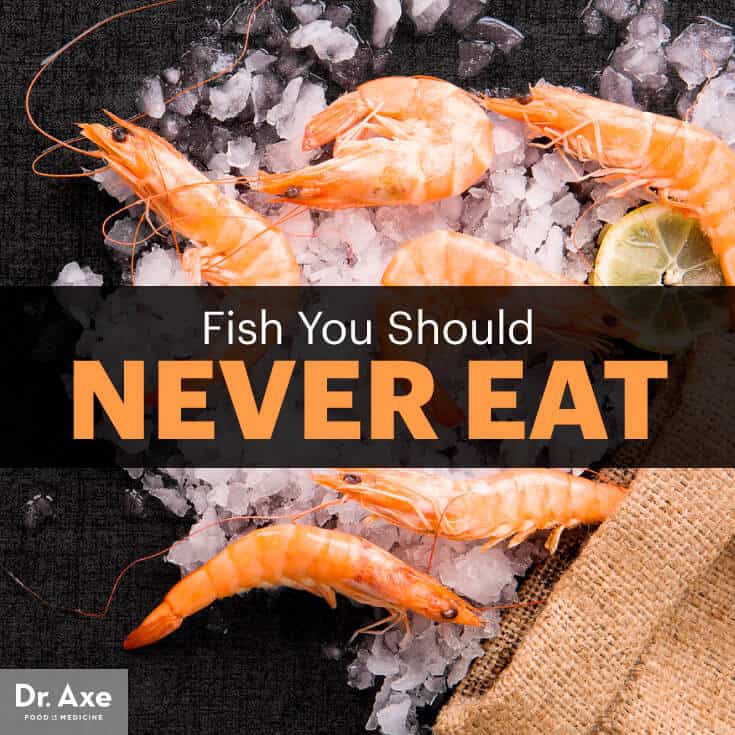
17 Unhealthy Fish You Should Avoid + What to Eat Instead

Fish can serve as a power food … or an absolute inflammatory, toxic nightmare for your body. It all depends on what fish you choose. That why it’s so important to pay attention to (and avoid) the fish you should never eat. 

Let’s take a look at fish you should never eat, plus healthier options. 

Fish You Should Never Eat


1. Tilapia

Wake Forest University School of Medicine researchers say tilapia is one of the most widely consumed fish in America. The problem with that? It contains very low levels of beneficial omega-3 fatty acids and, perhaps worse, very high levels of omega-6 fatty acids. That means the natural fish oil benefits found in this fish are not likely adequately boosting your omega 3s.

2. Atlantic Cod

Although the female cod releases more than a hundred millions of eggs, only a few are able to survive to adulthood. According to Oceana, scientists agree that North Atlantic food webs have fundamentally changed as a result of the Atlantic Cod collapse, and the species is currently considered vulnerable to extinction. 


3. Atlantic Flatfish (Atlantic halibut, flounder and sole)

Due to historical overfishing and contamination levels, it’s best to leave these fish in the sea. While some organizations say Pacific halibut is a better option, there are some issues with that.


4. Caviar

Beluga sturgeon are ancient fish that are highly sought for their fish eggs, aka caviar. In fact, this fish grows to be very large and can live to be 100 years old. According to Oceana, the fish that produces this prized caviar is in major trouble: It is completely gone from several seas/rivers in which it used to live, and scientists fear that it is critically 

5. Chilean Seabass

Actually named the Patagonia toothfish, seafood distributors started marketing this deep-sea predator fish as “Chilean seabass” because it sounded less intimidating. It worked. Now common on menus around America, Chilean seabass overfishing has left this species in serious trouble.

6. Eel

Aside from overfishing problems, eels tend to readily absorb and store contaminants like endocrine disruptors like PCBs and flame retardants. In certain states like New Jersey, river eels are so contaminated even a grown man is advised to eat no more than one eel a year. 


7. Farmed Salmon (Atlantic or Wild-Caught)

Most salmon marketed as “Atlantic” salmon is farmed, meaning fish are raised in conditions that have been shown to be ridden with pesticides, feces, bacteria and parasites.

8. Imported Basa/Swai/Tra/Striped Catfish (Often Labeled “Catfish”)

These are popping up as trendy new menu items all over America, but what you’re likely getting is a fish called pangasius, a fish that wholesales for $2 a pound. I consider this the #1 filthiest fish on the menu.

A 2016 study found 70 to 80 percent of pangasius samples were contaminated by Vibriobacteria — the microbes behind most cases of shellfish poisoning. Raw or undercooked pangasius, the authors warned, could pose a hazard to consumers.

9. Imported Farmed Shrimp

Is shrimp good for you? When it comes to farmed shrimp, which accounts for about 90 percent of the shrimp we consume, the answer is a resounding “no.” And given shrimp accounts for a whopping 30 percent of all seafood we import, and the fact that Americans eat about 4 pounds of it a year, it’s important to learn the facts.

10. Imported King Crab

Because you should avoid imported king crab at all costs, be really sure of where those crab legs came from before you order them. If the label makes claims like “imported” and “Alaskan,” something is clearly wrong.


11. Orange Roughy

One of the longest living marine fish species, orange roughy can live to be 150 years old. Generally known as slimehead in the scientific community, seafood marketers had other ideas for this fish and gave the species a more appetizing name. The end result was a severely overfished species.


12. Shark

Most shark species, which are slow to mature and don’t have a lot of offspring, are severely depleted.


13. Atlantic Bluefin Tuna

A highly sought-after sushi ingredient, it’s best to say no thanks to this menu item. Atlantic bluefin tuna lands on the fish you should never eat land for a few reasons. First, it’s been overfished to the point of near extinction. But due to its high demand for sushi, fisheries managers are still allowing commercial fishing to target it. 

14. Swordfish

Mercury is the main concern when it comes to avoiding swordfish. 

15. King Mackerel

Mackerel is certainly packed with healthy omega-3s. But when it comes to certain types of mackerel, you could be getting more than you bargained for. That’s certainly the case with king mackerel — the Food an Drug Administration warns women and children to outright avoid it. 

16. Grouper

Grouper is on the list when it comes to fish you should never eat due to high mercury levels.  This species is also highly vulnerable to overfishing, so it’s best to take a pass when you see it on the menu. 

17. Sturgeon

As I shared in the caviar section, Beluga sturgeon are especially targeted for their eggs. But other sturgeon are at risk, too. 
x

17 Fish You Should Never Eat + Safer Seafood Options

Fish can serve as a power food … or an absolute inflammatory, toxic nightmare for your body. It all depends on what fish you choose. That why it’s so important to pay attention to (and avoid) the fish you should never eat.

It’s vitally important to get ample omega-3 fatty acids, and certain fish may serve as potent sources. But due to things like fossil fuel emissions, heavy metals like mercury are winding up in the water and building up in our fish. Unfortunately, low-level mercury poisoning from contaminated seafood is a real threat and can lead to devastating effects, especially in the developing fetus. (We’re now learning mercury impacts adults’ hearts in very concerning ways, too, including heart attacks and hypertension.)

There are other reasons to avoid certain species on the fish you should never eat list, too. Some fish have been so overfished that they are on the brink of collapse. And losing them could impact the ocean ecosystem in a way that could lead to a cascading effect, impacting so many other species we rely on for nutrition, too. Luckily, there are healthy, low contaminant choices with stable populations that serve as much smarter choices.

Let’s take a look at fish you should never eat, plus healthier options. (Of course, the healthy omega-3s found in fish actually come from the fish eating phytoplankton, so you could always bypass fish and go straight to the source for your omega 3s.)

Fish You Should Never Eat

1. Tilapia

Did you know that in some regards, eating tilapia is worse than eating bacon? In fact, the shift to eating more farmed fish like tilapia is leading to highly inflammatory diets, according to a 2008 study published in the Journal of the American Dietetic Association. (1)

Wake Forest University School of Medicine researchers say tilapia is one of the most widely consumed fish in America. The problem with that? It contains very low levels of beneficial omega-3 fatty acids and, perhaps worse, very high levels of omega-6 fatty acids. That means the natural fish oil benefits found in this fish are not likely adequately boosting your omega 3s.

The low omega-3/high omega-6 ratio is a potentially dangerous food for people living with heart disease, arthritis, asthma and other allergic and autoimmune disease symptoms who are vulnerable to an exaggerated inflammatory response. This inflammation damages blood vessels, the heart, lung and joint tissues, skin and the digestive tract.

And get this. Wake Forest researchers found that farm-raised tilapia, as well as farmed catfish, “have several fatty acid characteristics that would generally be considered by the scientific community as detrimental.” Tilapia harbors higher levels of potentially detrimental long-chain omega-6 fatty acids than 80-percent-lean hamburger, doughnuts and even pork bacon. (2)

2. Atlantic Cod

Historically, Atlantic cod is a species proven to be vitally important to feeding the New World civilization and early colonization of the Caribbean Sea. But the heavy fishing over the last thousand years has taken its toll. In the late 1990s, catastrophe struck: the fishery collapsed.

Although the female cod releases more than a hundred millions of eggs, only a few are able to survive to adulthood. According to Oceana, scientists agree that North Atlantic food webs have fundamentally changed as a result of the Atlantic Cod collapse, and the species is currently considered vulnerable to extinction. (3)

If you’re a fan of cod liver oil, make sure it’s not sourced from Atlantic cod. The best cod source  comes from Alaskan cod caught with a  longline, pot or jig. (Call the manufacturer and ask how the fish is caught if it’s not apparent.) Just be aware this and other types of cod can be moderately high in mercury. (4)


3. Atlantic Flatfish (Atlantic halibut, flounder and sole)


Due to historical overfishing and contamination levels, it’s best to leave these fish in the sea. While some organizations say Pacific halibut is a better option, there are some issues with that.

For starters, in 2014, Oceana, the largest ocean conservation group in the world, conducted an investigation using data from the National Marine Fisheries Service. It identified the nine worst fisheries in the U.S. based on “wasted bycatch.” Yes, the data showed commercial fishermen in the U.S. throw about 2 billion pounds of “bycatch” overboard each year. That’s equivalent to about a half-billion seafood meals. The California gillnet fishery that targets halibut was identified as one of the worst. If you’ve eaten U.S. halibut, there’s a good chance it came from this damaging fishery, according to the report. (5, 6)


4. Caviar


Beluga sturgeon are ancient fish that are highly sought for their fish eggs, aka caviar. In fact, this fish grows to be very large and can live to be 100 years old. A single fish can carry several hundred pounds of caviar, making the caviar worth up to $3,500 a pound. Oceana says this makes the Beluga sturgeon the most valuable fish in the world to fisherman. (7)

According to Oceana, the fish that produces this prized caviar is in major trouble:

It is completely gone from several seas/rivers in which it used to live, and scientists fear that it is critically endangered. In other words, it is very highly vulnerable to extinction across its entire range. Without further protection and enforcement of existing efforts, we may forever lose one of the biggest, most interesting fishes in the world.

As a much healthier and more sustainable alternative, try “poor man’s caviar.” It’s one of my favorite eggplant recipes. Or tap into black-eyed peas benefits by created “Texas caviar.”

If you absolutely cannot give up caviar, Seafood Watch recommends caviar from blue sturgeon raised in recirculating aquaculture systems in the U.S. Beluga sturgeon, including caviar, is a “Best Choice” when farmed in closed tanks in the U.S. That’s because closed tanks often have less waste, disease, escapes and habitat impacts than other aquaculture systems. (8)

5. Chilean Seabass


Actually named the Patagonia toothfish, seafood distributors started marketing this deep-sea predator fish as “Chilean seabass” because it sounded less intimidating. It worked. Now common on menus around America, Chilean seabass overfishing has left this species in serious trouble.

Aside from that, I consider this a fish you should never eat due to elevated mercury levels, too. Environmental Defense Fund notes harvesting this fish from Chile is especially problematic, as it accounts for about 20 percent of U.S. imports and is plagued by poor management and bycatch problems. (9, 10)

6. Eel


Monterey Bay Aquarium’s Seafood Watch places eel on its “Avoid” list on its sushi guide. An eel, also called unagi on many sushi menus, is slow to mature and has been overfished in many parts of the world, bringing some populations to collapse. (11) The news of the eels’ plummeting numbers (and finding out about its incredible migration) may hopefully make the fish harder to swallow. (12)

This is leaving even Asian countries looking to American eels, which is threatened among U.S. populations, too. That’s a problem because eels are super important when it comes to protecting our water supplies. In Delaware River, the longest undammed river East of the Mississippi River, eels are an integral part of spreading mussel populations that serve as natural water filters. Think of them as one important piece of the puzzle when it comes to nature’s Brita filter. (13)

Aside from overfishing problems, eels tend to readily absorb and store contaminants like endocrine disruptors like PCBs and flame retardants. In certain states like New Jersey, river eels are so contaminated even a grown man is advised to eat no more than one eel a year. (14)

7. Farmed Salmon (Atlantic or Wild-Caught)


Americans consume a lot of salmon. Unfortunately, the majority is the unhealthiest kind.

If there was ever a fish you should never eat, this is it. And for a number of reasons. The dangers of farmed fish, particularly farmed salmon, are enough to make your stomach turn. Most salmon marketed as “Atlantic” salmon is farmed, meaning fish are raised in conditions that have been shown to be ridden with pesticides, feces, bacteria and parasites. (15)

It’s illegal to fish wild Atlantic salmon because they’re listed as endangered under the Endangered Species Act. In fact, even with current protections and efforts to restore the species, there’s up to a 75 percent chance U.S. Atlantic salmon could be extinct by 2100. Farmed salmon aquaculture is a huge reason the species can’t rebound, along with other issues like climate change, water pollution and water extraction. (16)

Here are a other reasons inflammation-boosting farmed salmon needs to be a fish you should never eat:

An October 2016 study found omega-3 levels in farmed salmon are rapidly dropping and are half of what they were five years ago. Part of the reason for the nutrient loss is salmon farm feed contains less ground anchovy content. The high demand for farmed salmon feed is causing anchovy numbers to crash, so less is now being used in salmon feed patties. (17) (This is another argument for eating lower on the food chain.)
University of New York at Albany researchers found dioxin levels in farm-raised salmon to be 11 times higher than those in wild salmon. Dioxins are classified as “dirty dozen” chemicals that are stored in fat cells. Their half life is 7 to 11 years. The environmental pollutants are linked to cancer, organ damage and immune system dysfunction (18, 19)
A 2011 study published in PLoS One found mice-eating farmed salmon actually showed weight gain and an increased risk of metabolic syndrome and type 2 diabetes symptoms. (20) The risk comes from the persistent organic pollutants, or POPs, that tend to be high in farmed salmon. POPs looked at in this study include organochlorine pesticides, dioxins and PCBs.
A 2011 Food and Water Watch aquaculture report highlighted some concerning statistics. Hundreds of thousands of farmed fish escape into the wild. These fish are often carrying “super lice” parasitic hitchhikers that even the harshest chemicals no longer kill. Some even carry other diseases that can debilitate nearby wild fish populations. Farmed salmon have also been treated with banned pesticides, another serious toxicity concern. (21)
Fish farms threaten other sea life in other ways too. And remember: Fish farms don’t really combat overfishing: they contribute to it. Salmon, for instance, are carnivores. It takes about 2½ to 4 pounds of other fish to create the salmon chow needed to produce 1 pound of farm-raised salmon. The overfishing of wild sardines, anchovies, mackerel, herring and other fish upset natural ecosystems. “We are not taking strain off wild fisheries,” agricultural economist Rosamond L. Naylor told the Los Angeles Times back in 2002. “We are adding to it. This cannot be sustained forever.” (22)
In November 2015, the Food and Drug Administration approved the sale of genetically engineered salmon and will not require any labeling, leaving consumers in the dark. It was approved despite findings the GMO salmon doesn’t actually grow as fast as its creator claims. (23, 24)
Luckily, wild-caught Alaskan salmon is one of the best seafood choices you can make, so you have a great alternative here.

8. Imported Basa/Swai/Tra/Striped Catfish (Often Labeled “Catfish”)


These are popping up as trendy new menu items all over America, but what you’re likely getting is a fish called pangasius, a fish that wholesales for $2 a pound. (25) I consider this the #1 filthiest fish on the menu.

A 2016 study found 70 to 80 percent of pangasius samples were contaminated by Vibriobacteria — the microbes behind most cases of shellfish poisoning. Raw or undercooked pangasius, the authors warned, could pose a hazard to consumers. (26)

Beyond the ick factor, these pangasius ponds in Vietnam have given birth to “the most intensive and productive food production system on earth.” Aside from destroying important river life and wetlands, this fish factory farming method results in fish swimming in waste and sludge. They’re also treated with a broad range of antibiotics, in addition to pesticides and disinfectants.

The antibiotics used include several that are characterized as critically and highly important for human health according to the World Health Organization (WHO). In 2017, Europe rejected at least 17 pangasius shipments due to nitrofuran antibiotic residues. (27) All of this antibiotic abuse makes the issue of stopping superbugs that much harder.

The U.S. isn’t immune, either. In fact, an August 2016 report shows a U.S. catfish inspection agency recently turned away 40,000 pounds of imported catfish due to contamination issues. This includes fish testing positive for malachite green, a veterinary drug used to treat sick fish. (28)

In other imported “catfish” crackdown news, the owner Virginia Star and International Sea Products was actually sentenced to five years in prison in 2015 for importing $15.5 million worth of pangasius “catfish” and marketing it as sole, grouper, flounder, snakehead, channa and conger pike, a type of eel. DNA tests revealed that the frozen fish was in fact Pangasius hypophthalmus, a fish in the catfish family marketed under approved trade names including swai or striped pangasius. (29)

If you see swai, basa, striped catfish or any type of imported catfish on the menu, run. And take it as a sign that the restaurant isn’t taking seafood safety or sustainability seriously.

9. Imported Farmed Shrimp


Is shrimp good for you? When it comes to farmed shrimp, which accounts for about 90 percent of the shrimp we consume, the answer is a resounding “no.” And given shrimp accounts for a whopping 30 percent of all seafood we import, and the fact that Americans eat about 4 pounds of it a year, it’s important to learn the facts. (30)

A few fast facts that landed farmed shrimp on the fish you should never eat list:

In 2009, Italian researchers discovered that 4-hexylresorcinol, a food additive used to prevent discoloration in shrimp, possessed estrogen-like effects. This newly classified xenoestrogen could reduce sperm count in men and increase breast cancer risk in women. (31, 32)
An AP investigation uncovered a slavery network in Thailand dedicated to peeling shrimp sold around the world. “Shrimp peeled by modern-day slaves is reaching the U.S., Europe and Asia.” (33) In 2007, Thailand alone exported about $1.24 billion to the United States, according to Food and Water Watch.
All but one of the pesticides used globally in shrimp production are banned for use in U.S. shrimp farms. Only a diluted form of formaldehyde, called formalin, is approved for U.S. shrimp farms. (Formalin is also a potential carcinogen.)
Shrimp farm pond waters are often treated with neurotoxic organophosphate pesticides linked to symptoms of ADHD, memory loss and tremors. Malachite green, a potential carcinogen, is often used to kill fungus on shrimp eggs. Once it has been used, malachite green will stay in the flesh of shrimp for a very long time – more than 200 days in water that is 50 degrees F. (34)
Food and Water Watch notes that rotenone is a chemical used to kill off fish living in the pond before it’s stocked with young shrimp. If inhaled, it can cause respiratory paralysis. Studies have also linked rotenone to Parkinson’s symptoms in mice.
Shrimp farm ponds are often shocked with organotin compounds to kill mollusks before stocking with shrimp. These hormone-disrupting chemicals mimic estrogen and have been dubbed “obesogens.” That mean they mess with the hormonal system in a way that predisposes someone to obesity, regardless of what they eat. (35)
Food and Water Watch stated, “On average, an intensive shrimp operation only lasts for seven years before the level of pollution and pathogens within the pond reaches a point where shrimp can no longer survive.”

It’s clear farmed shrimp is unhealthy and unsustainable. It takes up to 2.8 pounds of wild fish to produce just one pound of industrial shrimp! But to be quite frank, I don’t think “healthy” shrimp exists. Even if you can somehow harvest them naturally in a wild-caught environment free of toxins, I still wouldn’t consume them because they are naturally bottom feeders. If you must eat shrimp, Monterey Bay’s Seafood Watch recommends the U.S. farmed version or Alaskan shrimp. (36)

Many tout wild shrimp from the U.S. Gulf as a sustainable option, but there are major concerns with bycatch. In fact, Oceana named Southeast Shrimp Trawl Fishery one of the nine dirtiest fisheries in the U.S. For every pound of shrimp landed, 1 pound of billfish is discarded and thousands of sea turtles are killed annually, the organization notes.

Seriously? You still want to eat shrimp? Just be forewarned: Oceana also uncovered seafood fraud in the shrimp department. Using DNA testing, its team discovered that 30 percent of shrimp samples tested were mislabeled.  A whopping 25 percent of shrimp samples that were labeled as wild or presumed to be wild (often called “Gulf”) were actually farm-raised shrimp. (37)


10. Imported King Crab


About 75 percent of king crab sold in the U.S. in imported from Russia, where unsustainable fishing practices are common. Although Alaskan king crab legs legally can only be called that if they’re harvested from Alaska, widespread mislabeling is the norm. For instance, many red king crabs caught in Russia under questionable practices are marketed as Alaskan king crab legs.

Because you should avoid imported king crab at all costs, be really sure of where those crab legs came from before you order them. If the label makes claims like “imported” and “Alaskan,” something is clearly wrong. (38) (Check out Seafood Watch’s complete crab recommendations for more info.)

11. Orange Roughy


One of the longest living marine fish species, orange roughy can live to be 150 years old. Generally known as slimehead in the scientific community, seafood marketers had other ideas for this fish and gave the species a more appetizing name. The end result was a severely overfished species.

Since orange roughy don’t reach sexual maturity until at least 20 years old, they are very slow to recovery. According to Oceana: “The extremely long lifespan and the late age at maturity imply that a decimated population may take a half century or longer before it can recover.” (39)

Beyond that, orange roughy, which is a larger fish that hangs out near the ocean floor as an adult, is known to have higher mercury levels. (40)


12. Shark


Sharks are commonly found on fish you should never eat lists for several reasons. As bosses of the sea, they are very high on the food chain. That translates to higher mercury levels you should avoid in both foods and supplements.

But aside from that, most shark species, which are slow to mature and don’t have a lot of offspring, are severely depleted. Reasons include:

Sharks being caught accidentally by the thousands and discarded as waste by tuna and swordfish longline fishers.
A high demand for shark fins for Asian cuisine.
Most sharks mature slowly and have few offspring. (41)
13. Atlantic Bluefin Tuna

A highly sought-after sushi ingredient, it’s best to say no thanks to this menu item. Atlantic bluefin tuna lands on the fish you should never eat land for a few reasons. First, it’s been overfished to the point of near extinction. But due to its high demand for sushi, fisheries managers are still allowing commercial fishing to target it. (42)

Often referred to as Hon Maguro on sushi menus, this simple means bluefin tuna and should be avoided at all costs. A better sushi choice would be katsuo/skipjack tuna caught through Pacific troll or pole and line methods only. (43)

Sadly, bluefin tuna numbers are at just 2.6 percent of historic population levels. And September 2016 negotiations aiming to improve the fish’s fate did not bode well, with Pacific fishing nations refusing to agree to new catch restrictions  or meaningful conservation efforts. (44)

Aside from the obvious population collapse and extinction threat, this is also a large predatory fish that harbors higher levels of mercury, so it’s best avoided. (45)

And when you do eat sushi, make sure you know what you’re getting. In 2015, a Santa Monica restaurant and two sushi chefs were charged for selling whale meat, including meat from the endangered sei whale. The restaurant, which has since closed, had labeled the whale as fatty tuna to hide its true identity. (46) (I bet my vegan sushi recipe is sounding pretty good right now, right?)


14. Swordfish


Mercury is the main concern when it comes to avoiding swordfish. This large, predatory fish contains elevated levels. In fact, mercury in this fish is so high Environmental Defense Fund, using Environmental Protection Agency guidance, recommends women and children avoid it altogether. For men, the recommendation is to eat no more than one serving a month. (47)


15. King Mackerel


Mackerel is certainly packed with healthy omega-3s. But when it comes to certain types of mackerel, you could be getting more than you bargained for. That’s certainly the case with king mackerel — the Food an Drug Administration warns women and children to outright avoid it. (48) Avoid Spanish mackerel, too. That’s been shown to harbor elevated mercury levels. (49)

Luckily, Atlantic mackerel is high in omega-3s and low in mercury and is rated a top choice for health and sustainability.


16. Grouper


Grouper is on the list when it comes to fish you should never eat due to high mercury levels. (50) This species is also highly vulnerable to overfishing, so it’s best to take a pass when you see it on the menu. (51)

Grouper is also the common target of seafood fraud. In 2015, an investigations found that more than a third of 19 restaurants in Atlanta sold pangasius (that “Vietnamese catfish” raised in filthy conditions) as grouper. Testing also found that “grouper” for sale is actually often king mackerel or whitefin weakfish, a cheaper alternative. Between one-fifth to more than one-third of the halibut, grouper, cod and Chilean seabass samples were mislabeled. (52)

17. Sturgeon


As I shared in the caviar section, Beluga sturgeon are especially targeted for their eggs. But other sturgeon are at risk, too. Some even appear on restaurant menus. According to the International Union for Conservation of Nature, sturgeon are “more critically endangered than any other group of species”. (53)


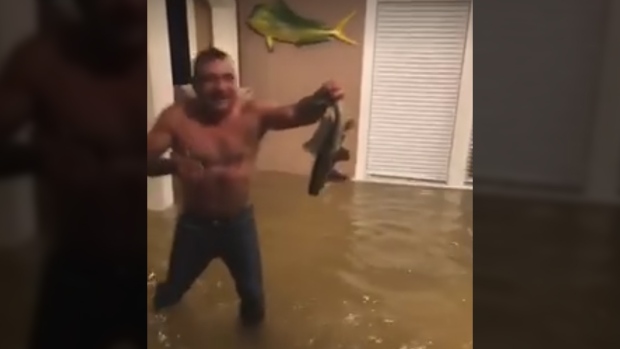
Gone fishing? Man dives to catch fish in house flooded by Harvey

Flooding caused by Hurricane Harvey meant a man in Houston, Texas didn’t even have to leave his house to go fishing.

Saul Saldana managed to wrangle a fish that swam into his flooded house after he opened to the door to try and let some of the water out.
Saldana’s skills were captured on camera by his daughter Viviana, who posted the videos to social media.

In the clips, Saldana is seen comically diving into the water several times as he tries to get hold of the fish. He eventually succeeds, holding up the fish by its tail as his daughter laughs in the background.
Hurricane Harvey has caused severe flooding in other parts of Texas, leaving thousands of residents trapped.
According to officials, at least two people have died and 14 have been injured by the hurricane.

Wednesday, August 23, 2017

Fishing report: Heavy rain improves bass and catfish bite

Melvin Stewart on the Cumberland River: 


I traveled toward downtown on Sunday and fished the main river channel. The water was stained, at 79 degrees and 6 inches above summer pool. I greatly enjoy fishing first thing in the morning for small mouth bass in the current on rocky bluff banks. I caught one nice three-pounder on a top water popper while riding the bank making long casts. In addition, I also caught three large mouth bass in the shallows using a 10-inch red-and-black worm. .

• Brian Carper on Percy Priest:


The lake continues to produce quantity and quality crappie. Up lake is producing the most with a mix of keepers and short fish. Focusing in 12-18 feet of water around brush piles and stake beds while fishing with live minnows 2-3 feet off the bottom and with Crappie Magnets in purple/chartreuse on a 1/8 ounce jig has been the ticket. Around Fate Sanders Marina, the Weakley Lane Bridge and up to Spring Creek have been fabulous. Bass continue to move up and down points and ledges in 8-12 feet of water. Mid-range crank baits in shad pattern, Carolina Rigs and shaky heads with Zoom green pumpkin trick worms or red ribbon tail worms have been successful. With the abnormal cooler temperatures moving into Tennessee for August we'll continue see a shallower bite. 

• Chris Snow on Center Hill: 


Bass fishing continues to be good and has been all summer. The nighttime bite is still producing the best results. This trend should continue for the next several weeks. Worms, jigs and spinner baits are the baits of choice. Fish these baits along 45-degree banks for best results. Walleye fishing continues to improve, especially in the mid- to upper-section of the lake. 

• Steve McCadams on Kentucky Lake:


At midweek, in the aftermath of thunderstorms, a rare August cool snap descended and the change is suiting Kentucky Lake anglers just fine. Lower humidity and temperatures aren’t the norm in late August, but no one is complaining. Surface temperatures have been in the 82-85 degree range. Lake levels have been falling slowly, but some localized flooding on Tuesday may see the reservoir crest for a few days. Projected elevation for Kentucky Dam this weekend will be 356.9. Upstream at New Johnsonville the reservoir is projected to be in the 356.7 range. Water color remains clear in the main lake, but several bays are stained in the upper end. The upper end of Big Sandy also had muddy water entering at midweek. There has been a little current this week as TVA has been pulling water most days through Kentucky Dam with enough volume to keep a little flow in the main channel areas. The slow current has helped bass and catfishing at times. Bass anglers are finding main lake ledges paying dividends in a typical summer pattern. Big Texas-rigged worms are still producing as are shad colored variations of big deep diving crank baits. Carolina-rigged craws and worms have produced too as have some swim baits.

• Tim Tighe on lower half of Cheatham Lake: 


As of Monday afternoon the main lake is in relatively good shape, but stained in some areas and clearer in others. You can catch fish in both, but the clearer water gives you more options for sight baits such as swim baits, drop-shotting, etc. The Harpeth River is very stained. This has been a tough year for water clarity especially in the Harpeth, which forces you to slow down and probe the thick cover with dark colored or vibration baits. Most of the creeks are also in good shape. This will sound similar to last week’s report, but very little has changed except for the Harpeth’s condition. What has been working for me lately is fishing early when the fish may be almost anywhere. They moved to the transition zone or the first break line about 8-15 feet as the sun gets stronger or brighter. I use my electronics to see what level the shad are at and catch them with a crank bait, swim bait or other shad-imitating bait. Then, as the sun gets even higher in late afternoon, I find them around deep wood or on the ledges in the main lake using Zoom Old Monster worms in plum or redbug, Strike King Bottom Dweller spinner baits (3/4 to 1 ounce) or Strike King 6XD crank baits on the appropriate level on the ledges.

• Joey Monteleone on the headwaters of Percy Priest and a small lake:


 Surface water temperatures are steamy. Late summer typical patterns of early morning and late are holding up. Many species are holding in the shade or combinations of submerged wood and aquatic weed beds. I found fish scattered in as little as one foot and up to 12. I actually saw some active bluegill spawning beds this week. Catfish remain active, still seeking comfort in cooler current close to deep cover. We’re locked into a strong summer bass pattern of a top water bite, subsurface crank bait and soft plastic success. The Texas-rigged soft plastics, worms, craws and creature baits are solid for the next several weeks. Try submerged wood and secondary weed beds of any variety. Points and dropoffs deserve a cast or two. The crappie bite is sporadic. It will get better once temperatures drop. Live minnows, soft plastics, small tubes and small curly tail grubs are working for crappie. Bluegill, redeye and sunfish continue to eat red worms or bits of nightcrawlers on a No. 8 light wire hook with a small split shot for weight all under a float. The next major moon phase will be full Sept. 6.

Impressive catches earn NZ Sport Fishing Council trophies


There were some impressive fish captures in the NZ Sport Fishing Council’s 2016/17 annual trophy list, including a world record swordfish and a ‘grander’ blue marlin, both caught out of trailer boats.

Nicky Sinden’s 361.0kg swordfish, recently ratified as a women’s 60kg tackle world record, also saw her take out the coveted ‘Old Man and the Sea Trophy for the most meritorious catch of the season. The fish was caught on stand-up tackle in the vicinity of the Garden Patch, out from Whangaroa.

Muriwai club member Wade Wilson, fishing out of Ahipara, landed a 466kg blue marlin to claim the heaviest game fish of the season and Fisherman of the Year honors. The biggest striped marlin went to Mt Manganese's Carey Wilson who landed a 196.6kg fish near Astrolabe reef, also out of a trailer boat.

Billfish tagging honours this year went to Houhora club’s Donna Pascoe, fishing aboard Gladiator with eight striped and three blue marlin to her credit. Whangaroa club’s Baily McIntyre took out the overall tagging award for 12 yellowtail, 10 blue shark, 8 mako and 2 bronze whaler.

Shimano Coltsniper Wonderfall jigs


Shimano’s versatile Coltsniper Wonderfall Jigs are specifically engineered to suspend longer when dropping through the water column. By spending more time in the strike zone, these lures are more visible to saltwater predators looking for an easy meal. They are available in five colours and 30, 40, 50, 60, 80 and 100g weights. The twin assist rigs feature quality VMC Stinger hooks.

Available from all Shimano retailers nationwide.

NZFN Sept 2017 preview


Welcome to the September edition Bluefin tuna – the aftermath

Last month we shared information, similar to what was on social media, regarding the run of bluefin tuna off Cape runaway in the eastern Bay of Plenty.

What resulted was nothing other than a ‘tuna fever’ that ran hot among the highly mobile fishing fraternity. While it was great to see anglers getting among the action, there were always going to be repercussions.

In this issue we look at the aftermath of ‘bluefin’ fever, and talk to a number of people including the Waihau Bay club, scientists, Ministry for Primary Industries and NZ Sport Fishing Council to get their spin on it – interesting reading.

While the bluefin run extended our gamefishing season, there is still plenty more action out there to be had. Ben Carey this month looks at the winter albacore run that can produce fish up to 25kgs plus – great fun on light tackle.

For those who like their action closer to home, both Gene Bryan and Andy Macleod cover off land-based tricks and techniques.

Anglers are frequently met at the ramps by both Ministry for Primary Industries officers as well as NIWA volunteers, wanting to check out the catch. The latter group are conducting important research for NIWA on the fish stocks and extent of the recreational catch. Their work is explained this issue by scientist Bruce Hartill.

New contributor Peter Jones kicks off a series on small boat fishing tips and tricks while kayaker Rob Fort continues his series on winter fishing.

We preview the forthcoming Auckland On the Water Boat Show. Hunting and Fishing NZ will dominate the fishing court which is again hosted by NZ Fishing Media – us. Included will be the popular seminars where various experienced anglers share their knowledge with show patrons.

For those who like to enjoy angling offshore, this issue has some great destinations. One of the most spectacular is Costa Rica where Josh Worthington and James Brown get among some insane tarpon action. Mark Kitteridge continues his Niue sojourn with his third and final feature.

Adam Clancey and Grant Dixon cover off fishing opportunities in Canada and Hawaii. Tony Orton makes a case for ‘going light’ in his Journey of a Fisherman series.

Two boats are put through their paces this month – Al Brown and Jeremy Coombes award-winning Surtees 575 Pro Fisher Centre Console is covered in Grant Dixon’s Setting Up for Sportfishing while Sam Mossman’s Trailerboat Trial features a Frewza F18 Hard Top.

All of the above, along with the regular features and columns, makes for a great month of reading. Enjoy!

3 Ways to Zone In on Deep Bass


Knowing the ‘right’ depth to focus on is a difficult task for bass anglers, especially as they move to deeper water. Searching for bass in deep water can start to feel a little like looking for a needle in a haystack, which is probably why many anglers still avoid deep bass fishing. Spending just a few hours offshore in the abyss without knowing what depth zone to key in on can send any angler back to the bank with their proverbial tails tucked between their legs. 

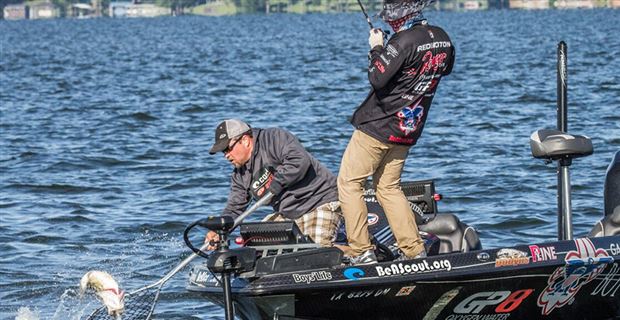
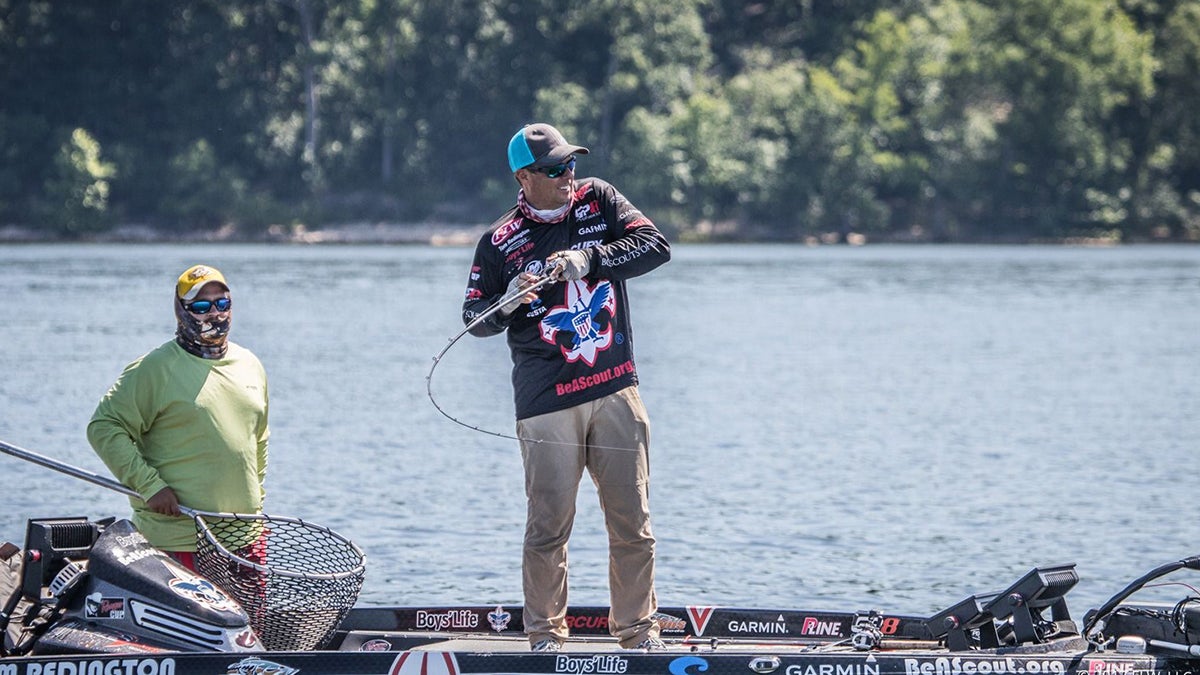
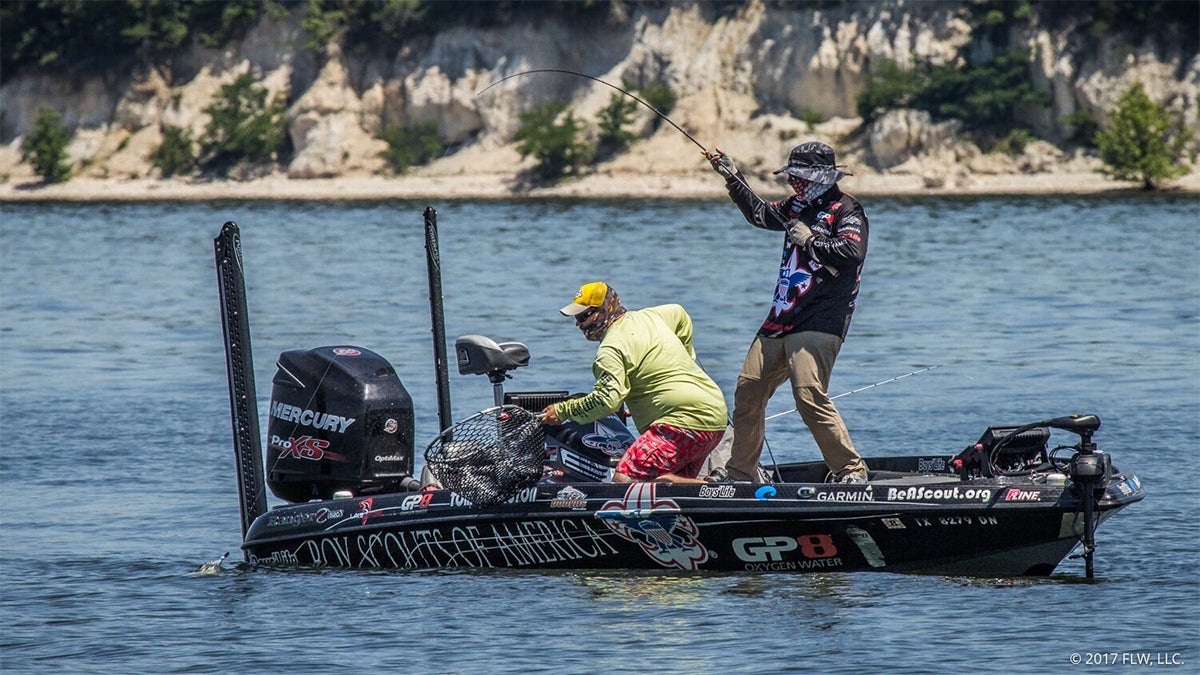
Fortunately, FLW Tour pro Tom Redington has found a way to zone in on the key depth range for a given fishery. Furthermore, he has a few tips on how to find more spots within this ideal depth that can help you on your next search for offshore bass. 

Focus on the ‘right’ depth


As bass move offshore, Redington believes there is an optimal depth range in every section of every fishery. This ideal depth is different for every lake and changes as bass migrate. Redington has used this phenomenon to his favor in his career, racking up several high finishes in offshore–dominated tournaments by understanding the ‘right’ depth.

“The real advantage of this concept is that it makes an angler’s search easier,” Redington said. “Once I find what I feel is the ideal depth range, whether it’s in 8 feet deep or 28 feet, I can look at a lake map and specifically focus on areas in this opportune depth. Offshore fishing can be overwhelming, but this method really allows me to zone in on structure in the depths I am confident bass are using. “


He first learned the nuances of finding the right depth during his time guiding on Lake Fork. Redington would notice schools of bass holding consistently to specific depths for a few days, only to find they moved deeper the next week. It wasn’t only one school of bass that would move deeper, though. Instead it seemed all the schools of bass in one section of a fishery would move somewhat in unison. 

“This logic helped me notch another Top 10 in an FLW Costa Series event on Kentucky Lake last month,” Redington said. “On the final day of practice I found the bass were out deeper than I normally find them—26 to 29 feet seemed to be the key depth. After I figured that out, anywhere I found a creek channel junction, hump or a ditch at that depth had a good chance of having some bass on it. And by only focusing on those depth zones, I was able to find several schools of bass with less than a full practice day.”

Redington runs Garmin electronics and uses their Depth Shading mapping feature to make his search even easier. Depth Shading was important in helping Redington throughout the FLW Tour season and directly contributed to his recent Top 10. 

“Garmin Depth Shading helped me tremendously,” Redington said. “I used 3-foot contours on my color shading and made the 26 to 29-foot zone yellow so it really jumped out at me. Illuminating several spots I ended up catching fishing in the tournament on that I had never even graphed, let alone fished. Contours with 1-foot intervals are extremely helpful in many situations, but they get kind of busy out deep on a complex lake. By making 3-foot contour intervals and changing the color patterns it made finding the spots kind of easy.”  

Quickly find the ‘right’ depth

Redington’s number one shortcut to find a key depth during an offshore tournament is quick, easy and can be practiced with anything from 2-D sonar to today’s modern electronics. 

“The first thing I’ll do is graph a deep point or ledge that falls off into very deep water,” Redington said. “Whether it’s Lake Fork, Kentucky Lake or Table Rock, you’ll be able to see a distinct line at a certain depth where both fish and baitfish seem to be suspending. This line is usually unmistakable and for whatever reason, fish don’t want to go deeper than this specific depth zone. Where I find this line is exactly where I start my search in an offshore tournament. 


“If I see baitfish and predatory fish consistently suspending in 28 feet of water, I’m going to graph structure from 25 to 28 feet deep. It’s important to understand this depth won’t be the same for an entire lake. Especially on a body of water with a clear, stable lower end and a shallow, riverine upper end for example. There will still be ideal depths in the different areas of a lake, but they’ll be different and specific to the section of the lake you find yourself in.”

Redington suggests this phenomenon occurs throughout the year but is something he uses to his advantage when bass go to their deepest haunts during the summer and winter months. Even though this shortcut has helped him cash numerous checks, Redington admits he doesn’t understand exactly why fish strictly relate to these ideal depths throughout different times of the year.  

“Who knows why exactly the fish do it,” Redington joked. “Biologically they may be relating to thermocline or light penetration, or it could be water temperature or dissolved oxygen. Something definitely is a driving factor, because the consistency is there, but I won’t pretend I know exactly why. As an angler, it really doesn’t matter what they are relating to as long as I understand it happens and do my best to take advantage of it.” 


Once Redington feels he has zoned in on the opportune depth range the baitfish, bass and other predatory fish are using he employs another shortcut to refine his search for likely spots. 

“I’ll look at my electronics and find structure with the most surface area in the optimal depth,” Redington said. “Whether it’s 12 feet or 30 feet, I’ll look for points, humps, channels or ledges with a lot of surface area in that depth zone. This narrows down my search to areas I believe have the highest percentage of holding large schools of fish.”

The method of finding spots with a significant amount of surface area in the key depth zone gives Remington the highest probability of finding bass in his allotted practice time.

Bonus Link ==>> Endangered whales won't reach half of pre-hunting numbers by 2100, study says


Blogger Templates